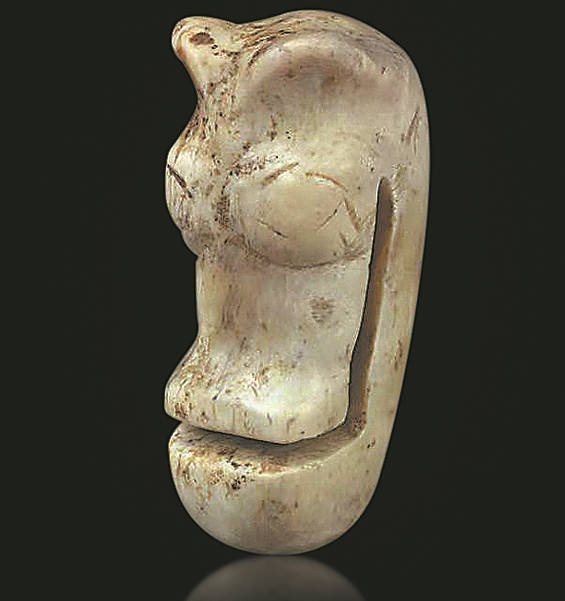
Songze Site
Introduction
The Songze Site is an archaeological site located on the outskirts of Shanghai, and it is renowned for its significant contributions to the understanding of early Chinese civilizations. This Neolithic site, which dates back to approximately 3900 BC to 3300 BC, is a part of what is known as the Larger Songze Culture. It provides critical insights into the prehistoric societies that once thrived in the lower reaches of the Yangtze River and the surrounding regions of Taihu Lake in the Yangtze River Delta.
Historical Significance
The Songze Site is recognized for its role in the development of early Chinese civilization. It is often referred to as the "father" of the Liangzhu civilization, which succeeded it in the same geographical region, starting around 3300 BC. The cultural practices and developments observed at Songze helped lay the foundations for Liangzhu, which is regarded as a more advanced civilization that existed from 3300 BC to 2300 BC.
Archaeological Discoveries
Archaeological excavations at the Songze Site have unearthed a variety of artifacts, including jade cong, yue and huang, which are typical types of jade associated with the Liangzhu culture. These findings have highlighted the link between the jade production practices at Songze and those at Liangzhu, suggesting a continuity and evolution of cultural and ritualistic practices over time.
The jade artifacts discovered at Songze exhibit connections with other prehistoric cultures in China, such as the Lingjiatan and Hongshan cultures. These connections have provided valuable insights into the transregional networks and interactions that existed among early Chinese societies, facilitating the exchange of materials, ideas and cultural influences.
Cultural Connections
The Songze Site is a part of the larger narrative of cultural interactions between various Neolithic societies in China. It is believed that the elite members of societies in regions like Hongshan and Lingjiatan maintained networks that allowed for the exchange of jade artifacts and cultural motifs. For instance, the jade dragons and other motifs found at Songze bear similarities to those from Hongshan, indicating a shared cultural heritage and influences across vast distances.
Legacy and Impact
The jade artifacts found at the Songze Site, such as jade dragons, cong and bi, are significant for their artistic and ceremonial importance. These artifacts were not only used in rituals but also carried symbolic meanings, reflecting the beliefs and values of the societies that crafted them. The dragon motifs, in particular, exhibit a continuity in design that has influenced Chinese art and mythology for millennia.
The Songze Site, along with its jade artifacts, serves as a testament to the complexity and sophistication of Neolithic societies in China. It highlights the interconnectedness of early Chinese civilizations and their ability to inspire and influence each other across time and space. The findings at Songze have challenged previous assumptions about the origins of Chinese civilization, demonstrating that it was not confined to a single region but rather a confluence of diverse cultures and influences.








